All Philadelphia School District Schools and Offices will be closed on Monday February 16 and Tuesday February 17, in observance of President’s Day and Lunar New Year.
"I want to thank the entire Philadelphia community for being active and equal partners and for your robust engagement in, and influence on, this work. Though we acknowledge that this work is challenging, and some of the decisions we have to make will be difficult, I believe that we have developed a plan that will help us increase access to high-quality academic and extracurricular programs across neighborhoods and accelerate our journey to become the fastest-improving, large urban school district in the country."
— Tony B. Watlington Sr., Ed.D. Superintendent
School District of Philadelphia Facilities Master Plan
The goal of this plan is to increase access to high-quality academic and extracurricular programs across neighborhoods, while addressing under- and over-enrollment at many of the District’s aging and unequal facilities. View the press release for a summary of the recommendations released today.
Select a theme below to learn more about school recommendations*.
*Recommendations not final until plan is adopted by the Board of Education.
Strengthening PreK–8 Programming Through Better Use of Space
Many school programs with declining enrollment, or which operate in aging buildings, struggle to offer a full range of high-quality classes, activities, enrichment opportunities, and supports.
Our goal: Improve student and educator access to spaces, staffing, and resources needed for comprehensive, high-quality PreK–8 teaching and learning environment.
View School Recommendations
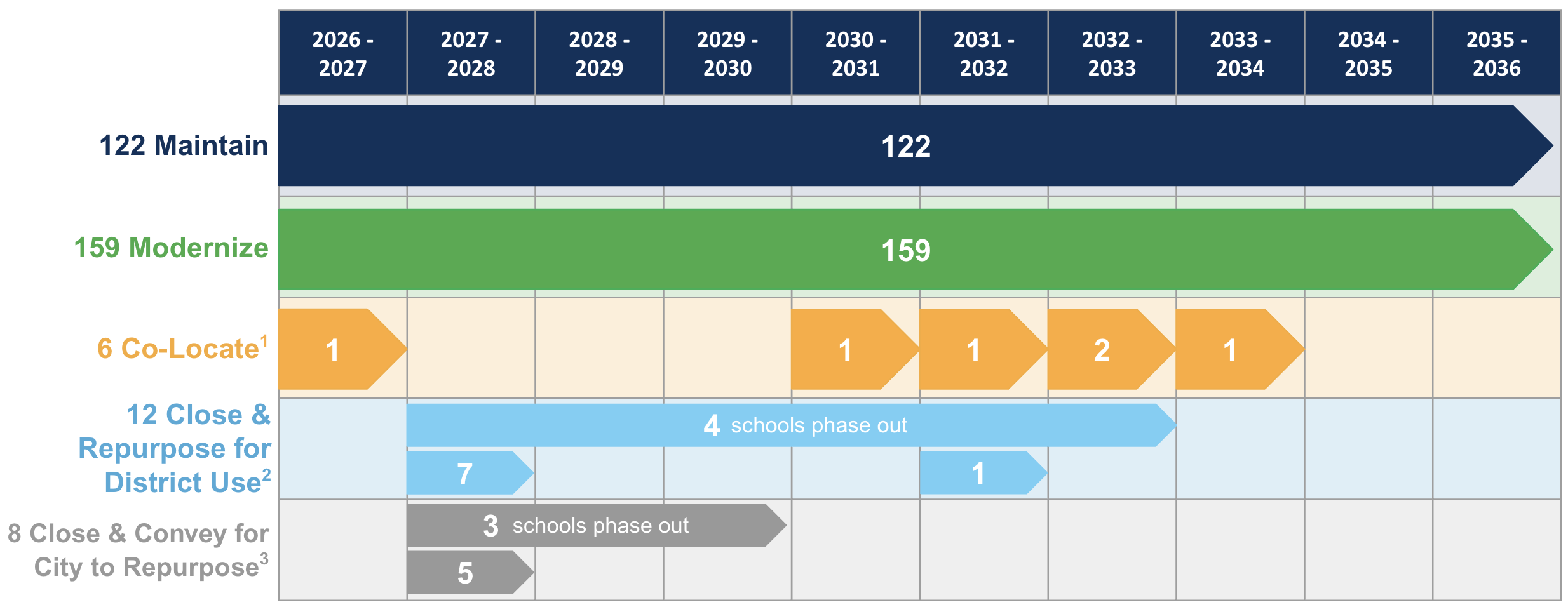
The District proposes to close the following eight Pre-K-8 and K-8 schools and reassign students to other schools, in order to expand access to high-quality educational opportunities such as International Baccalaureate programs; language immersion programs; global studies programs; career-connected pathways, and Montessori programs by:
Closing Robert Morris Elementary and reassigning students to William D. Kelley Elementary School and Bache-Martin School. The Morris building will be repurposed as a hub for the District's Office of Diverse Learners.
Closing Samuel Pennypacker School and reassigning students to Franklin S. Edmonds Elementary School and Anna B. Day School.
Closing John Welsh Elementary School and reassigning students to John Hartranft School and William McKinley Elementary School. The Welsh building will be modernized and repurposed as a new year-round high school.
Closing James R. Ludlow School and reassigning students to Paul L. Dunbar School, Spring Garden School, and General Philip Kearny School. The Ludlow building will be conveyed to the City of Philadelphia for repurposing for affordable workforce housing and/or job creation.
Closing Laura W. Waring School and reassigning students to Bache-Martin School. The Waring building will be modernized and repurposed as the home of Masterman Middle School.
Closing Overbrook Elementary School and reassigning students to Lewis C. Cassidy Plus Academics, Guion S. Bluford Elementary School, John Barry Elementary School, and Edward Heston School. The Overbrook Elementary building will be modernized and repurposed as District network offices.
Co-locating Martha Washington Academics Plus School (K-4) students to the same site as Middle Years Alternative School (5-8). The Martha Washington building will be repurposed as District swing space.
Closing Rudolph Blankenburg School and reassigning students to James Rhoads Elementary School, Edward Heston School, and the newly co-located Martha Washington Academics Plus School/Middle Years Alternative School. The Blankenburg building will be conveyed to the City of Philadelphia for repurposing for affordable workforce housing and/or job creation.
Closing Fitler Academics Plus after phase out. The Fitler building will be conveyed to the City of Philadelphia or sold.
This could include:
Merging or co-locating schools
Investing in more suitable buildings
Increasing access to high-quality academics, extracurriculars, & enrichment
Reducing Unnecessary School Transitions for Students
Transitions between schools can be disruptive to learning and community connection. Research supports that students do better when they have fewer transitions between school programs during their PreK–12 experience.
Our goal: Create more predictable and supportive school pathways for students.
View School Recommendations
The District proposes to phase out the following middle school programs to grow the grade bands of their feeder schools where needed, as well as create more predictable and supportive school pathways for students by:
Phasing out General Louis Wagner Middle School and growing Prince Hall School, Joseph Pennell Elementary School, William Rowan School, Julia Ward Howe School, and Ellwood School. The Wagner building will be conveyed to the City of Philadelphia or sold.
Phasing out Stetson Middle School and growing Lewis Elkin Elementary School and William Cramp Elementary School. The Stetson building will be repurposed as District swing space.
Phasing out Warren G. Harding Middle School and growing James J. Sullivan School (which will move to the old Harding site), John Marshall School, Henry W. Lawton School, and Laura H. Carnell School.
Phasing out William T. Tilden's Middle School and growing Thomas G. Morton School, John M. Patterson School, and Joseph W. Catharine School. The Tilden building will be modernized and repurposed into an athletics and sports facility for Bartram High School.
Phasing out Academy for the Middle Years at Northwest (AMY NW). The AMY NW building will be conveyed to the City of Philadelphia or sold.
This could include:
Increasing PreK–8 schools
Adjusting existing grade configurations
Strengthening continuity of school culture and supports
Reinvesting in Neighborhood High Schools as Community Anchors
Some neighborhood high schools lack a full range of academic enrichment and post-high school preparation pathways, while some smaller magnet high schools lack extracurricular programs and diverse enrichment opportunities.
Our goal: Ensure every neighborhood high school offers strong, engaging academic, extracurricular, and enrichment programs while providing welcoming environments for students.
View School Recommendations
The District proposes to offer a full range of academic enrichment and post-high school preparation pathways to more students, close to where they live by:
Closing Lankenau High School and merging the Lankenau program into Roxborough High School as an honors program. The Lankenau building will be conveyed to the City of Philadelphia or sold.
Closing Motivation High School and merging the Motivation program into John Bartram High School as an honors program. The Motivation building will be repurposed as District swing space.
Closing Paul Robeson High School and merging the Robeson program into William L. Sayre High School as an honors program with investments in CTE spaces and dual enrollment opportunities. The Robeson building will be conveyed to the City of Philadelphia or sold.
Closing Parkway Northwest High School and merging the Parkway NW program into Martin Luther King High School as an honors program. The Parkway NW building will be repurposed as District swing space.
Co-locating the following citywide high school programs in neighborhood high schools to increase access close to where students live by:
Co-locating Building 21 at Martin Luther King High School. The Building 21 building will be conveyed to the City of Philadelphia or sold.
Co-locating Workshop School at Overbrook High School. The Workshop School building will be repurposed as a training facility for the District's Operations Division.
Co-locating The U-School at Thomas A. Edison High School. The U School building will be conveyed to the City of Philadelphia or sold.
Additional proposal:
Phase out Penn Treaty High School for closure. William Bodine High School will move into this site to expand the number of seats available at Bodine, creating more access to more robust academic programming.
This could include:
Targeted building improvements
Strengthening partnerships
Adding theme-based or career-connected programs to neighborhood schools
Expanding Access to Grades 5–12 Criteria-Based and CTE Schools
The Philadelphia community desires schools that allow students to learn in one community from middle grades through high school.
Our goal: At more schools, provide equitable access to consistent academic experiences.
View School Recommendations
The District proposes to increase the number of seats at grades five through 12 criteria-based and Career and Technical Education (CTE) programs to allow students to learn in one consistent community from middle grades through high school by:
Adding a fifth grade to Hill-Freedman World Academy.
Adding a fifth and sixth grade to Carver Engineering and Science.
Increasing capacity for the Arts Academy at Benjamin Rush in a new facility and adding grades 5–8.
Modernizing South Philadelphia High School's CTE spaces to be a state-of-the-art CTE hub and adding a grades 5–8 CTE program.
Merging Parkway West High School into Science Leadership Academy at Beeber and adding grades 5–8.
Opening a new grades 5–8 Academy at Palumbo Middle School co-located with George W. Childs School with a feeder preference to Palumbo High School to create a new grades 5–12 pathway.
Reassigning Conwell students to AMY at James Martin as a grades 5–8 program with a feeder preference to William Bodine High School (with the Conwell building being repurposed as District swing space).
Moving Bodine High School to the old Penn Treaty building and expanding the number of seats available at Bodine (with Constitution High School moving into the old Bodine building).
Moving Masterman's middle grades to the to-be-vacated Laura W. Waring building to expand access to the grades 5–12 school.
The Facilities Master Plan is anchored in investment in the future of education in Philadelphia. The recommendations make key investments including but not limited to: delivering access to algebra I for every middle school student; investing in upgrades to existing CTE programming at three neighborhood high schools and a new 5th-12th grade CTE hub; investing in a new 5th-12th grade at the Arts Academy at Benjamin Rush; opening a new Academy at Palumbo middle school and a new Bodine middle school; increasing seats at five criteria-based schools; doubling the number of incoming students who have access to District-administered PreK; opening K-8 and 9-12 year-round schools; opening a new comprehensive high school program in the Northeast; and completing 56 ADA improvement projects.
Generally, as a result of the Plan, you can expect investments in new and existing CTE programming; investments in arts, athletics, and extracurricular programming; increased space at criteria-based schools; increased access to PreK, thoughtful repurposing of facilities to accommodate year-round schools and address overcrowding; and improved and modernized facilities to promote 21st century learning.
The map provides a visual summary of some of the largest investments inherent in the Plan.
Strengthening PreK–8 Programming Through Better Use of Space
Reinvesting in Neighborhood High Schools as Community Anchors
Expanding Access to 5–12 Criteria-Based and CTE Schools
These recommended options describe the different ways a school facility may be improved, shared,
or repurposed based on districtwide planning criteria and community needs.
The school remains in its current facility and continues to operate with ongoing maintenance,
repairs, and system upgrades to support safe and functional learning environments.
RECOMMENDED OPTION
Modernize
The site will undergo new construction, physical rebuilding, or renovation to improve safety,
accessibility, and meet environmental and modern technology standards.
Learn more about modernization project types
Through this process, proposed school modernization projects may vary in size and scope, including:
Facility Condition Improvements
Investments in building systems such as the roof, envelope, HVAC, convening systems, ADA compliance,
restroom renovations, or liability-related upgrades. These improvements focus on functionality and
compliance rather than appearance.
Minor Renovation
A relatively small-scale investment aimed at improving building score, addressing minor facility
condition or appearance improvements and minor program alignment issues.
Major Renovation
Significant investments that may include building additions, reconfigurations, or extensive system
upgrades. These renovations can approach up to 90% of new construction outcomes.
New Build
Typically the largest investment, consisting almost entirely of new construction or major additions
combined with substantial renovations.
Recent Examples:
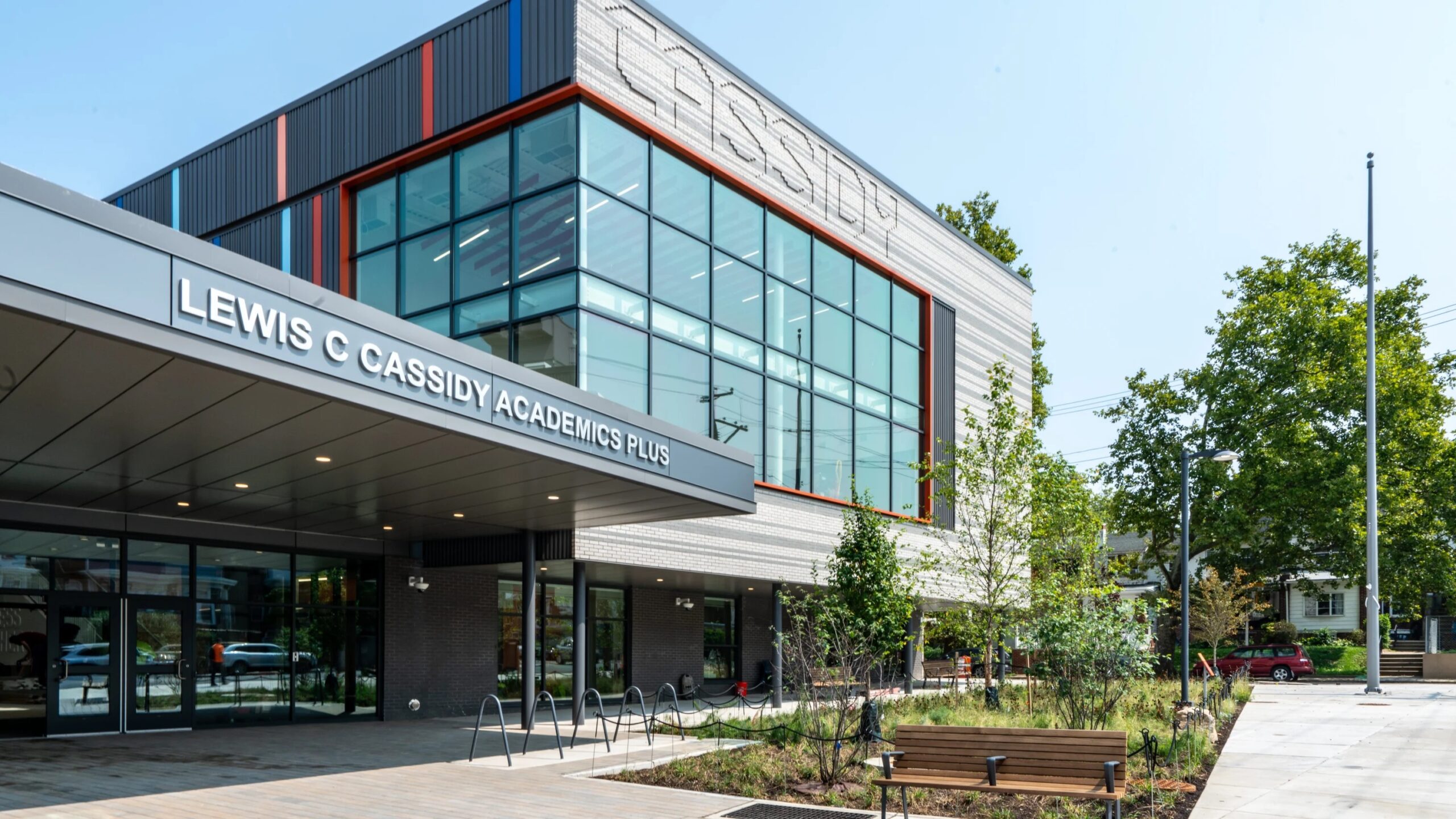
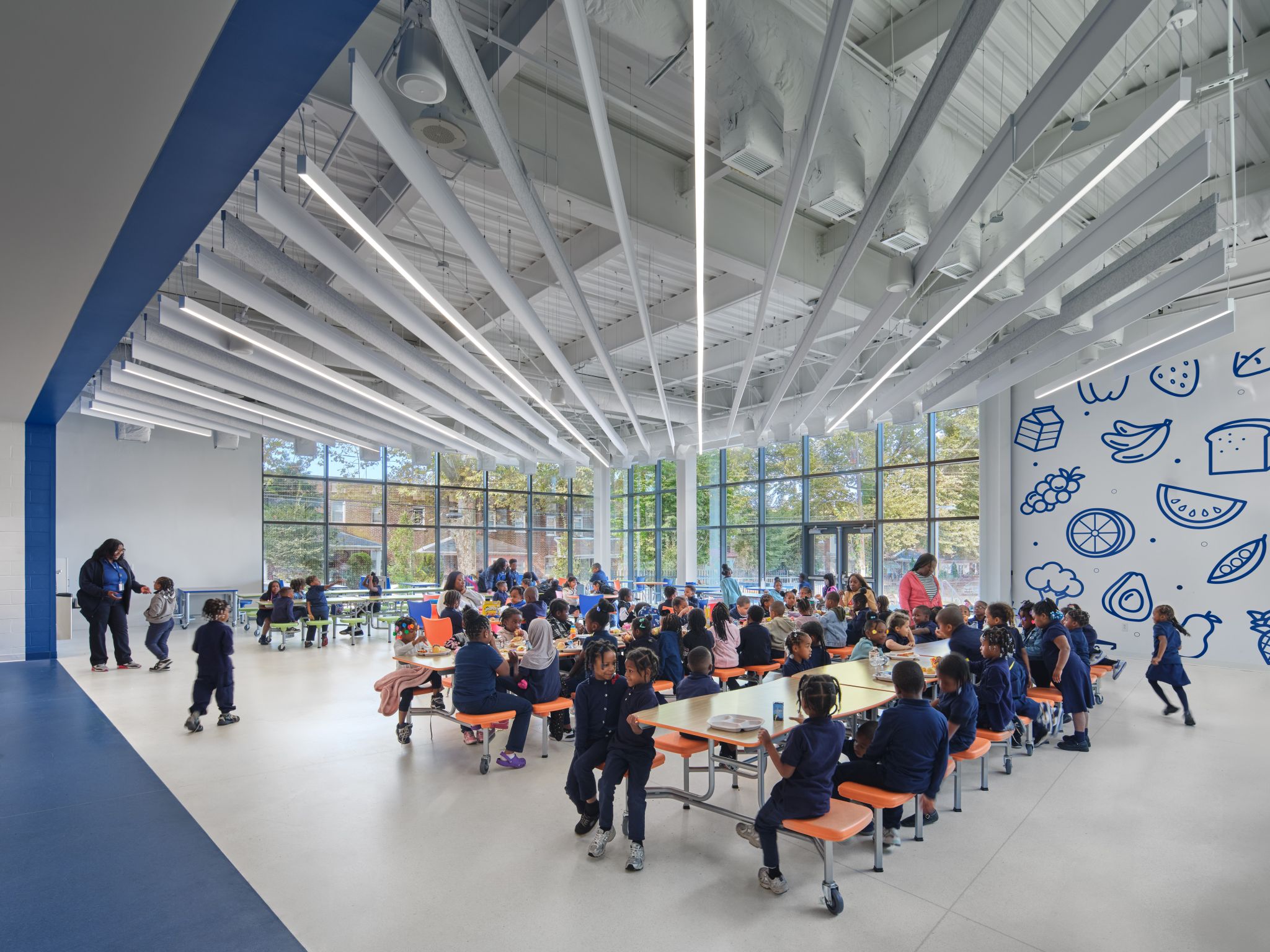
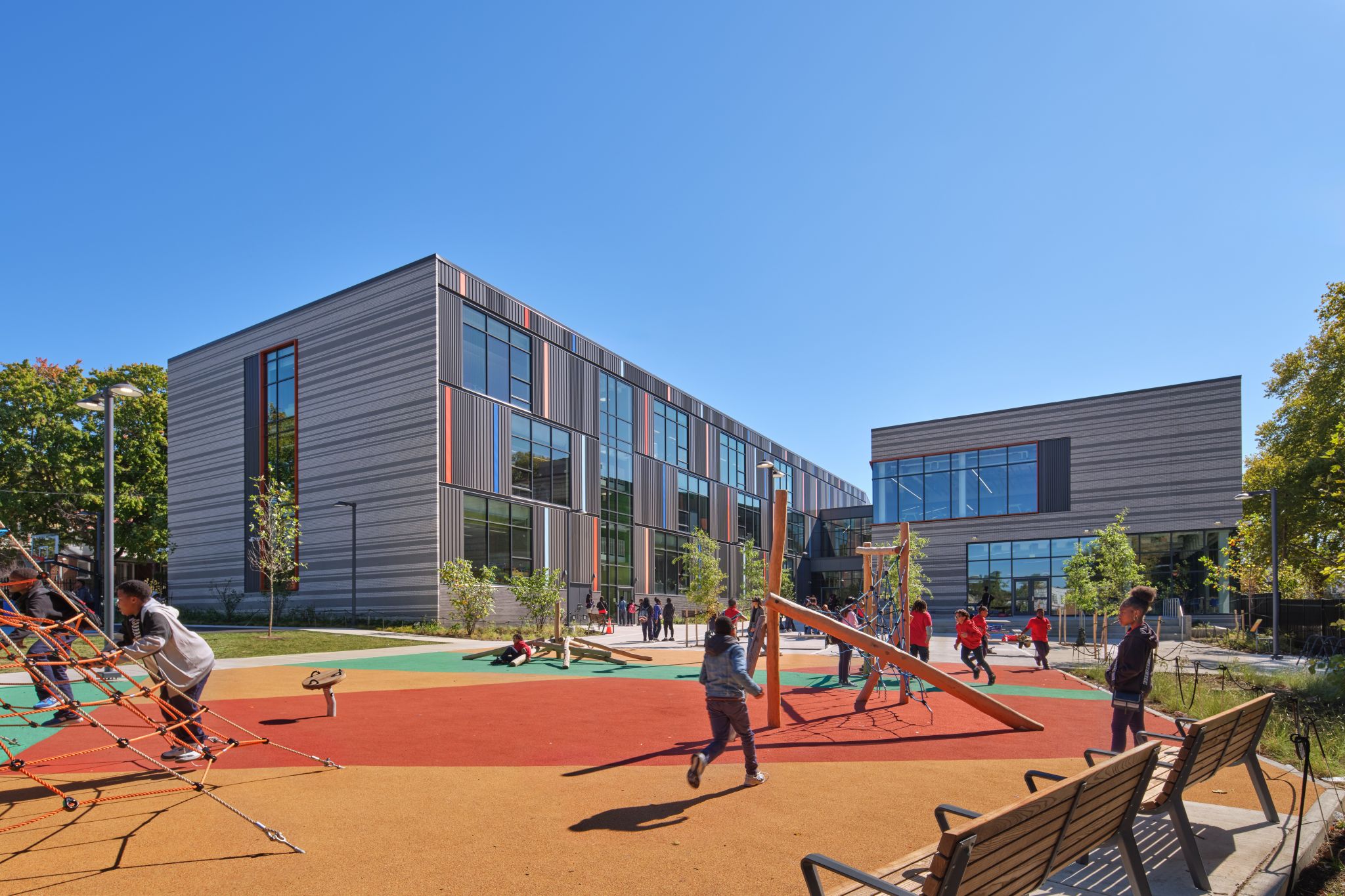
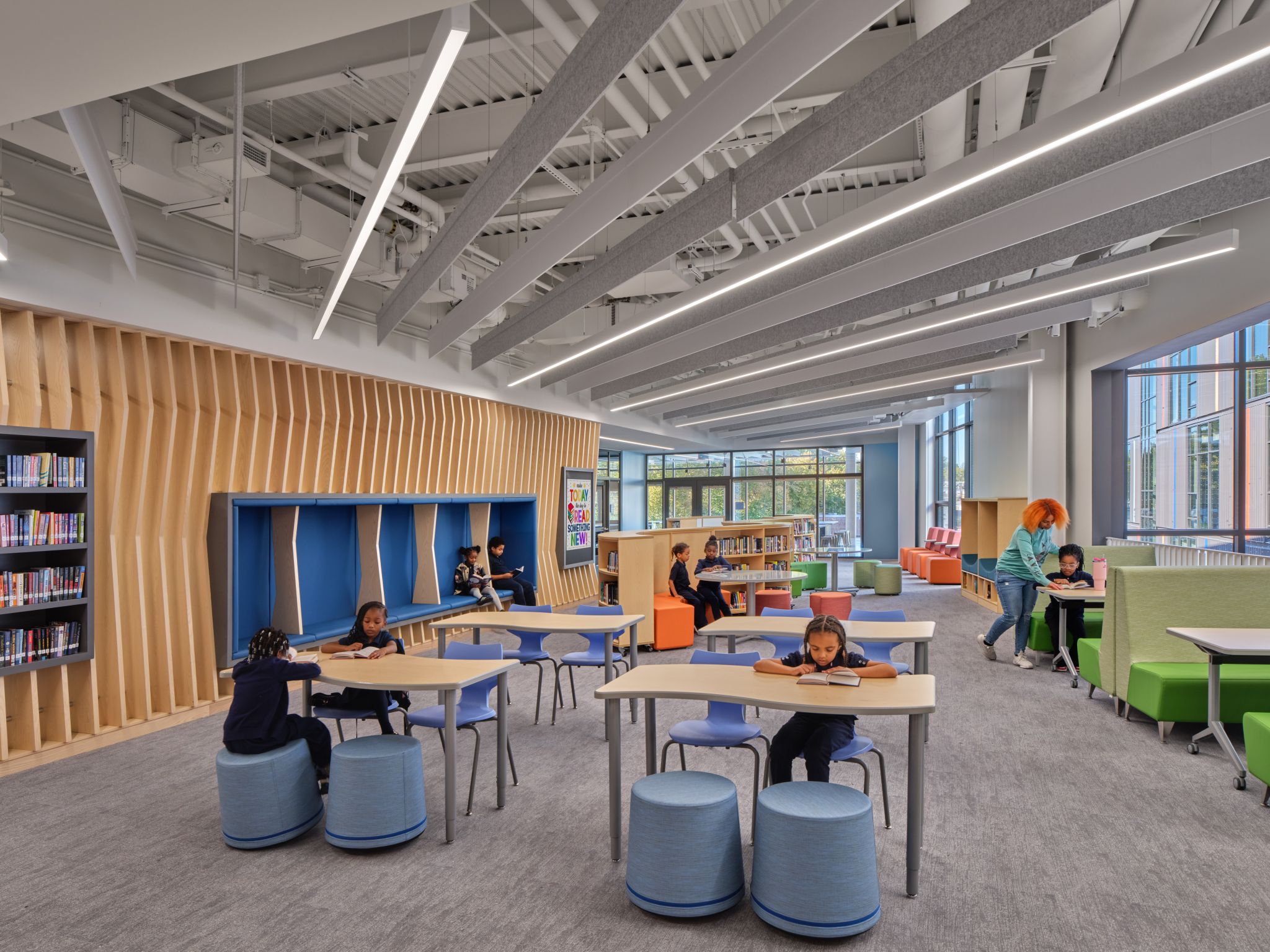
Lewis C. Cassidy (rebuilt)
Frankford High School (renovated)
RECOMMENDED OPTION
Co-Locate
Multiple, distinct academic programs operating within a single building.
Recent Examples:
Benjamin Franklin HS & Science Leadership Academy
Powel School & SLA Middle School
RECOMMENDED OPTION
Repurpose
The building will remain in operation, however one or more of the academic programs may close or relocate and the facility, or a portion of the facility, will be used for another community purpose (ex: swing space, PreK programming, or work space for external partners).
Examples:
WD Kelley (partnership hub)
Strawberry Mansion (swing-space)
MLK HS (Central Office work space)
RECOMMENDED OPTION
Close
The existing program will close and either phase out over time, merge into another school program as an honors program, or currently enrolled students will be reassigned to other nearby schools.
Upon closing, the school may be:
Repurposed for District use (swing space, work space for external partners, community partner programming, etc)
Conveyed to the City of Philadelphia for affordable workforce housing and/or job creation.
The School District of Philadelphia is committed to accelerating academic achievement while expanding access to high-quality academic and extracurricular programs across neighborhoods. The sections below highlight our progress to date and outline the ongoing Facilities Planning Process (FPP).
Accelerate Philly Progress
In 2022, nearly 3,000 community stakeholders from across the City of Philadelphia joined us in developing the new five-year strategic plan–Accelerate Philly. The focus of the plan is simple: to position the School District of Philadelphia, the nation’s eighth-largest, to be the fastest-improving large, urban school district in the nation and to achieve the Board’s Goals and Guardrails. And we are making progress towards that goal.
Over the past three years, we have seen:
Increased student attendance
Increased teacher attendance
An increase in the four-year graduation rate
Improved test scores for students in grades 3–8
A significant decrease in the number of student dropouts
An increase in district-wide enrollment for the first time in a decade
Facilities Progress
Over the last three years, we have also made historic progress in improving our school buildings and learning environments. The District has invested approximately $954 million in facility improvements, including:
Built three new school facilities: Lewis C. Cassidy Academics Plus School, Thomas Holme School, AMY James Martin
Completed seven new school additions
Completed 24 new classroom modernization and Career and Technical Education (CTE) expansion projects
Completed 89 energy, mechanical and life safety improvement projects
Built 22 new playgrounds or play yards
Reduced the number of schools with inadequate cooling nearly in half from 118 to 54
Added 1,618 state-of-the-art hydration stations in every school, with a total of 2,422 state-of-the-art hydration stations installed throughout the district
Completed lead paint assessments in 134 facilities, and certified 78 lead-safe schools
Tripled our investment in environmental management and, for the first time, are current in our AHERA inspections and schedule of repairs.
As we continue to build on these improvements to accelerate academic achievement, the District needs to increase access to high-quality academic and extracurricular programs across neighborhoods, recognizing that many of the District’s aging and unequal facilities are either under- or over-enrolled.
Facilities Planning Process (FPP)
Since we began implementing Accelerate Philly, our five-year strategic plan, we also launched an 8-phase facilities planning process. Through this process, we have completed seven of the eight phases, including:
Developed a five-year strategic plan (Accelerate Philly)
Developed a Request for Proposals (RFP) process to secure a data strategy vendor
Established academic baseline standards for our schools
Created a swing space plan to swiftly relocate students and staff to designated alternative locations when necessary
Created a data planning strategy
Completed a pilot facilities data warehouse
Completed a comprehensive facilities data warehouse (Academics, Environmental, Educational Suitability, Demographics, Safety & Security, Maintenance, Enrollment, FCA Partner, Data Leadership)
We are now in Phase 8: developing a comprehensive District Facilities Plan that will guide future investments and decisions about our school buildings.
Planning Team Members & Roles
Project Team Members & Roles
The Facilities Planning Process Project Team is a group of community leaders from across our city that will play an active role in drafting the facilities plan. These individuals represent a diversity of experiences and collectively have deep knowledge and understanding of our students, families, and community. They will meet monthly throughout this process to synthesize inputs from our public listening sessions and surveys, as well as review a wide range of data, to generate drafts for feedback from the Advisory Groups and the public overall. We thank these individuals for stepping up to serve in this important role and being generous with their time.
Project Team Members
Kenzy Ahmed, Student Board Representative, School District of Philadelphia
Soledad Alfaro, Chief Operating Officer, Chamber of Commerce for Greater Philadelphia
Dr. Darrin W. Anderson, Sr., President & CEO, Urban League of Philadelphia
Paul Bonewicz, Interim Deputy Chief Operations Officer, School District of Philadelphia
Donna Bullock, President and CEO, Project HOME
Rev. Bonnie Camarda, Director of Partnerships, The Salvation Army
Dr. Debora Carrera, Chief Education Officer, City of Philadelphia
Walette Carter, President, Philadelphia Home and School Council
Peng Chao, Chief of Charter Schools, School District of Philadelphia
Donna Cooper, Executive Director, Children First
Rebecca Cornejo, Executive Director, Neubauer Family Foundation
Daniel Di Martino, Kindergarten Teacher and PFT Building Rep at Shawmont, School District of Philadelphia
Jannette Diaz, President and Chief Executive Officer, Congreso de Latinos Unidos
Tanya Edmonds, Local 634 organizer, School District of Philadelphia
Cynthia Figueroa, President and CEO, JEVS Human Services
Shanée Garner, Founding Executive Director, Lift Every Voice Philly
Joe Gravius, AIA, NCARB, Philadelphia Housing Authority
Regina A. Hairston, MPA, President & Chief Executive Officer, African-American Chamber of Commerce of PA, NJ & DE
Dorene Henderson, School Safety Officer and Interim Treasurer of SPAP union, School District of Philadelphia
Kenyatta James, Deputy Executive Director, Economy League of Greater Philadelphia
Dr. Sabriya Jubilee, Chief of Diversity, Equity & Inclusion, School District of Philadelphia
Mary Beth Morgan, Independent Living Specialist; Youth Transition, Liberty Resources
Dr. Penny Nixon, Chief Executive Officer, Universal Charter Schools
Sulaiman Rahman, Board Chairman, Mastery Schools
Deana Ramsey, Principal, Philadelphia Juvenile Justice Center School
Charles Rinker, Student Board Representative, School District of Philadelphia
Councilmember Isaiah Thomas, Councilmember and City Council Education Committee Chair, City of Philadelphia
Rev. Alyn E. Waller, Senior Pastor, Enon Tabernacle Baptist Church
Dr. Shakeera Warthen-Canty, Assistant Superintendent of School Operations and Management, School District of Philadelphia
Jerry Roseman, PFT Director of Environmental Science
Advisory Groups & Member List
The Advisory Groups below comprise a wide range of backgrounds and experiences that represent key stakeholder voices in our schools and communities. They will meet monthly throughout this process to provide feedback, opinions, and experiences to inform the work of the Project Team and Facilities Planning Process. We thank these individuals for stepping up to serve in this important role and being generous with their time.
Education and Community Partners
Akira Drake Rodriguez, University of Pennsylvania
Darryl Bundrige, City Year Philadelphia
Dr. David E. Thomas, Community College of Philadelphia
Elizabeth Class-Maldonado, Trust for Public Land
F. Christopher Goins, Philadelphia Academies Inc.
Jeff Wasch, MA, Saint Joseph’s University
Justin Crews, Aramark
Laura Johnson, Sunrise of Philadelphia
Libby Lescalleet, Boys & Girls Clubs of Philadelphia
Madeline Birkner, Philadelphia Education Fund
Marcus Allen, Big Brothers Big Sisters Independence Region
Pep Marie, Our City Our Schools Coalition
Rhonda Lauer, Foundations, Inc.
Sean E. Vereen, Ed.D., Heights Philadelphia
Shaun Elliott, Greater Philadelphia YMCA
Veronica Chapman-Smith, Opera Philadelphia
Zig Rorer, Indego Bike Share
Elected and Government Officials
Congresswoman Mary Gay Scanlon, PA House of Representatives
Councilman Anthony A. Phillips, Philadelphia City Council
Councilman Curtis Jones Jr., Philadelphia City Council
Councilmember Cindy Bass, Philadelphia City Council
Councilmember Jamie R. Gauthier, Philadelphia City Council
Councilmember Katherine Gilmore Richardson, Philadelphia City Council
Councilmember Kendra Brooks, Philadelphia City Council
Councilmember Mark Squilla, Philadelphia City Council
Councilmember Michael Driscoll, Philadelphia City Council
Senator Nikil Saval, Pennsylvania State Senate
Senator Vincent Hughes, Pennsylvania State Senate
Speaker McClinton, Pennsylvania House of Representatives
Union Representatives
Arthur Steinberg, PFT
Bernadette Ambrose-Smith, School Police Association of Philadelphia
John Bynum, 32BJ
Nicole Hunt, Unite Here Local 634
Robin Cooper, CASA
Parents/Guardians
Adam Blyweiss
Alicia Gonzalez
Alyn Turner
Andrea Blassingame
Andrea Chaney-Lawrence
Angelina Rivera
Blithe Riley
Cecelia Thompson
Danyelle Campbell
Edwin Mayorga
Emily Pugliese
Ester Roche-Curet
Felicia Bryant-Dawson
Kara Medow
Kate Reber
Kevin Trimble
Kimberly Jessup
Kristen Rucker
Lauren Perez
Leah Corsover
Leslie McShane Lodwick
Maritza Guridy
Melanie Silva
Olga Doubrovskaia
Patrick Ganley
Ryan Stewart
Shalane M. Lutz
Shaleah Williams-Allen
Sherine Mathew
Tia Dancy
Veronica
Virginia Nguyen
Community Leaders
Aissia Richardson
Anna Forrester
Charisma Presley
Elaine Simon
Gabriella McLoughlin
Horace Cloudon
Jasmine Fleming
Jeron Williams II
Kristen Goessling
Leroy Baker
Leslie Diaz
Luisa Velasquez
Luz B. Colón
Lydia Currie
Mariah McMullen
Max Tuttleman
Nyjah Smith
Quibila A. Divine
Sam Vitiello
Sandra Dungee Glenn
Sangha Soun
Sharrieff Ali
Tamir D. Harper
Taslim Sabil
Veronica Holman
Wes Claffee
Zhanar Boschshanova
School Leaders
Amanda Pointer, Assistant Principal, School of the Future
Anieca Suber, Assistant Principal, Olney Elementary School
Blair Downie, Assistant Principal, Olney High School
Dr. Don Anticoli, Principal, Edward Heston School
Dana Frye-Thompson, Assistant Principal, Mary M. Bethune School
David Laver, Principal, Bayard Taylor School
Dr. Dollette Johns-Smith, Principal, Morton McMichael School
Gordon Laurie, Principal, Julia R. Masterman High School
Kate Sylvester, Principal, Fitler Academics Plus School
Kellie Gilroy, Former Assistant Principal and Interim Principal, Ethan Allen School
Kristin Williams Smalley, Principal, Roxborough High School
Kristy Len, Principal, Charles W. Henry School
Lawrence King, Principal, Paul Robeson High School for Human Services
Lori Riggs, Assistant Principal, George Washington High School
Mason Luksch Wilson, Assistant Principal, Lewis Elkin School
Mickey Komins, Principal, Anne Frank School
Monica Hawk, CEO, One Bright Ray
R. Michelle Torres, Principal, Isaac A. Sheppard School
Timothy M. Boyle, Principal, Science Leadership Academy Middle School
Todd Kimmel, Principal, Horatio B. Hackett School
Toni Damon, Principal, Middle Years Alternative School
Traci McCabe, Assistant Principal, Overbrook High School
Vance McNear, Principal, Edwin Forrest School
Will Brown, Principal, Parkway West High School
School Support Staff
Zam Than Lian, Bilingual Counseling Assistant, Horace Furness High School
Brite A Alexander, Student Climate Staff/Supportive Services Assistant, Tanner G. Duckrey School
Camille Barnes, Climate Lead, Charles W. Henry School
Cory Johnson, Senior Project Manager, Pre-K, Other
Daeshanae Diego, Paraprofessional, Central High School
Devon Smith, STEP Clinical Coordinator, Gloria Casarez School
Erika Dajevskis, School Counselor, Stephen Girard School
Felicia Rosen, Academic Coach, John Bartram High School
Gloria Collins, Paraprofessional, John F. Hartranft School
Janice A. Smith, School Nurse, John Hancock Demonstration School
Janice Evans Bernstein, Lead Speech Language Pathologist, Swenson Arts and Technology High School
Jessica Newell, School Counselor, Hamilton Disston School
Joana Diaz, Educational Technology Specialist, George Washington High School
Laurie Binder, Special Education Director, Other
Lenora Howard, School Improvement Support Liaison, Edward Heston School
Mark R. Francis B.S., Food Services Manager III, William H. Ziegler School
Najwa Smith, Industry Development Specialist, Walter B. Saul High School
Paul Brown, School Psychologist, Roxborough High School
Richard Jeffries, Occupational Therapist, Kenderton Elementary School
Ron Smith, Building Engineer, J. Hampton Moore School
S. Simone Knight, Climate Manager, John Bartram High School
Stephanie Reynolds, Instructional Coach, Other
Syida Johnson, Secretary III, Rudolph Blankenburg School
Tamara Sepe, Speech Language Pathologist, Carver High School of Engineering and Science + Charles W. Henry School
Theresa Mclaughlin, Computer Support Specialist, Murrell Dobbins Career and Technical Education High School
Tracey Petty, Director, Nursing, Other
Typrea Dorsey, Secretary I, John Barry School
Teachers
A. Reed, Teacher, Meade, General George G. Meade School
Charles Hudgins, Teacher, Abraham Lincoln High School
Charlotte Furcron-Lane, Teacher, Gloria Casarez School
Christa Iwaniw, Teacher, South Philadelphia High School
Dana McLaughlin, Teacher, Abraham Lincoln High School
Duran Perkins, Teacher, Julia R. Masterman High School
Elizabeth Cooper, Teacher, John B. Stetson Middle School
Emma Kaub, Teacher, Clara Barton School
Ibidunni T. Osundare, Teacher, Bache-Martin School
Jacquelyn Anderson, Teacher, Philadelphia Military Academy
Kelly Anatol-Castelli, Teacher, Samuel Gompers School
Kimberley Colasante, Teacher, Castor Gardens School
Lattonia Robichaw, Teacher, General Philip Kearny School
Lillian Goldberg, Teacher, Horace Furness High School
Linda Keels, Ed.D, Teacher, Northeast Community Propel Academy
Lisa Hannum, Teacher, Gloria Casarez School
Meredith McDonald, Teacher, Horace Furness High School
Mohammad Azim George Siddiqui, Teacher, Roxborough High School
Raquel E Morton Britton, Teacher, George Washington High School
Robert Schloss, Teacher, F. Amedee Bregy School
Seanier Keyes, Teacher, John B. Kelly School
Sheena Miles, Teacher, Andrew Hamilton School
Takia McClendon, Teacher, Mary M. Bethune School
Students
The student advisory group will consist of Superintendent Watlington’s Student Advisory Council which represents more than 40 schools from across the District.
Facilities Planning Timeline
Facilities Planning Timeline
September 2024 – December 2025
📊 Foundational Work
Sep 2024: Board of Education Approves Resolution to Initiate Facilities Planning Process
Oct 2024 – Feb 2025: Gather & Finalize Data
Dec 2024 – Jun 2025: Develop Decision-Making Framework
Ongoing: Project Team + Advisory Feedback
Monthly: Advisory Group Meetings / Project Team Meetings
🤝 Community Engagement & Public Updates
Nov – Dec 2024: Facilities Planning Process Listening Tour
Dec 2024: Facilities Stakeholder Feedback Survey Launch
July 2025: Decision-making Framework Engagement Sessions
Nov 2025: Emerging Themes Announcement
Nov – Dec 2025: Emerging Themes Survey Window
⚙️ Technical Planning
Jan – Jun 2025: Develop Decision-Making Framework
Sep – Dec 2025: Develop Plan
Winter 2026: Present Updated Plan to Board of Education
✅ Finalization
Community Engagement
In September 2024, the Board of Education issued a resolution directing the Superintendent to complete Phase 8 of the Facilities Plan. In this phase, the District is engaging community stakeholders and analyzing complex data through a robust process that will result in recommended actions to:
Provide greater access to high-quality academic and extracurricular programs across neighborhoods
Analyze complex data to address the under- and over-enrollment at many of the District’s aging and unequal facilities
These recommendations will be made public in the fall and will go through a comprehensive public feedback period before being submitted as final recommendations to the Board of Education.
The District is committed to meaningful engagement throughout this process. To date, we have:
Engaged a diverse project team and nine advisory groups totaling 170 individuals
Hosted 47 public listening and learning sessions
Conducted 35 principal verification sessions
Issued a survey that received more than 5,700 responses
The District will host its next round of community engagements focused on school scenarios, and we invite you to share your thoughts about these scenarios.
Every day we work together during the Facilities Planning Process brings us one step closer to providing access to high-quality academic and extracurricular programming across neighborhoods and achieving our vision of becoming the fastest-improving large urban school district in the country. Thank you for your ongoing participation and support.
The Facilities Planning Process is not a simple process with one right answer or where we average the numbers to reach a final decision. Each school is unique, and the decisions ahead are complex and require careful consideration.
A score of “unsatisfactory” in any category does not mean that a school is unsafe or will close. These data points do not dictate outcomes on their own. Instead, they provide a foundation for deeper analysis, community conversations, and informed short-term, mid-term, and long-term recommendations. Using this information, the superintendent will recommend one or more of five short-term, mid-term, or long-term options for each school: maintain, modernize, co-locate, repurpose, or close.
Register below for an upcoming community engagement session.
What leaders are saying
“As a principal in the School District of Philadelphia, I see firsthand how the condition and capacity of our buildings impact student learning every day. A comprehensive facilities plan is about equity, safety, and ensuring every child has access to a high-quality learning environment. All of our families deserve to send their children to school in a building that supports their needs.”
Andrew Lukov, Principal of Southwark School
“The data reaffirms the District’s need to increase access to high quality academic and extracurricular programs across neighborhoods, recognizing that many of the District’s aging and unequal facilities are under-enrolled or over-enrolled.”