
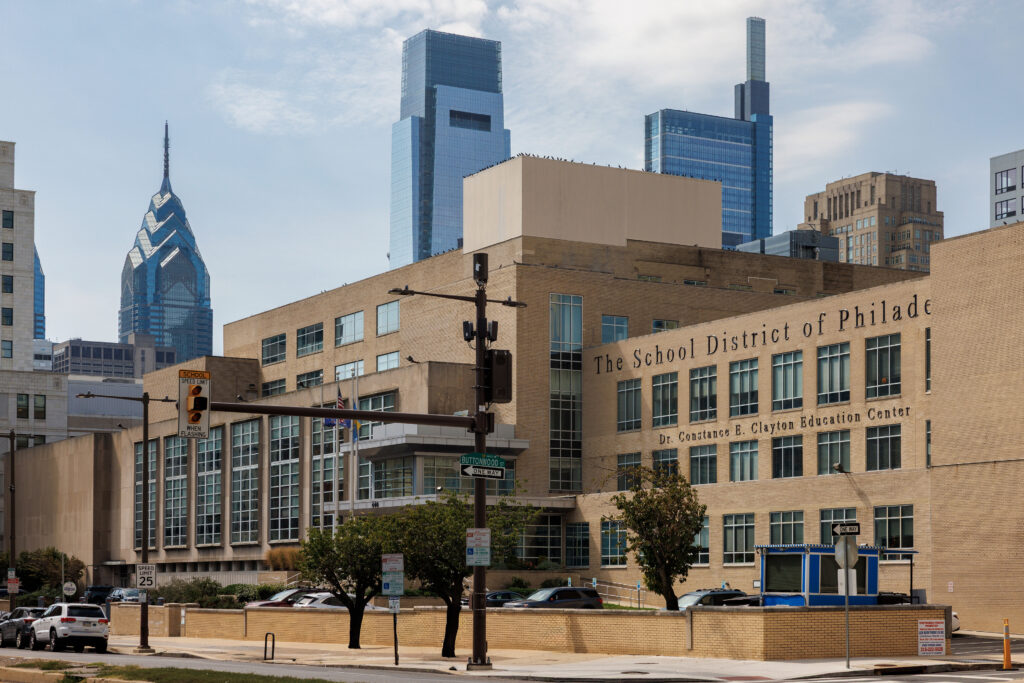
PHILADELPHIA — Today, the School District of Philadelphia’s Board of Education approved Accelerating Opportunity, by a vote of 6 to 3 The District’s comprehensive Facilities Master Plan isa 10-year roadmap to modernize school buildings, align resources with student needs, and accelerate academic achievement for students across the city. This important action by the Board adopts the recommendations within Accelerating Opportunity to align school buildings with our student enrollment needs, academic programs, and budgets to better serve our students. In implementing the plan, the Board will make additional decisions in the future regarding the budget, capital improvements, school closures, and declarations of the future use of properties as legally mandated.
The plan included four key updates since its original presentation to the Board of Education on January 22, 2026:
- Increased the total investment from $2.8 billion to $3 billion.
- Increased school modernizations from 159 to 169 campuses.
- Maintained 6 school co-locations
- Reduced School Closures from 20 to 17 programs
Additionally, the final version of the Accelerating Opportunity, facilities master plan, includes the following 12 revised recommendations from what was presented in January:
- Remove Conwell Magnet Middle School from closure recommendation and make Elkin Elementary feed into Conwell beginning in SY 2027-28 to increase enrollment.
- Remove Motivation High School from closure recommendation and merge Robeson High School into the Motivation site beginning in SY 2027-28 to increase enrollment.
- Close Robeson High School and merge with Motivation High School for SY 2027-28, rather than with Sayre High School.
- Close Lankenau High School and merge with Saul High School for SY 2027-28, rather than Roxborough High School.
- Remove James R. Ludlow School from closure.
- Transition Moffett Elementary School to a K-4 school, with middle grade students attending Ludlow.
- Expand Hackett School to a K-8 school.
- Retain ownership of the Lankenau High School property as an environmental education center for use by all District students, given the access to the The Schuylkill Center for Environmental Education.
- Retain ownership of the Robeson property and plan for its future use in partnership with the community, given its close proximity to one of the nation’s premier science and innovation hubs.
- Increase the planned investments in Council District 3 (that we shared on February 17) from $205 million to $331 million, which will fund modernizations at Anderson Elementary School, Bryant Elementary School, Mitchell Elementary School, and a pool renovation at Motivation High School.
- Increase the planned investments in Council District 5 (that we shared on February 17) from $299 million to $330 million, which will fund infrastructure for the North Philadelphia Promise Zone.
- Withdraw the recommendation to convey closed schools in this plan, which have been reduced from 10 to 7, to the city at this time in order to provide the Board with more time to consider legal and policy considerations.
“Since the start of our Facilities Planning Process, our focus has been on expanding equitable access to high-quality academics and extracurricular opportunities across all neighborhoods, while addressing the challenges of aging, underutilized, and overcrowded school buildings,” said Superintendent Tony B. Watlington, Sr., Ed.D. “This plan is designed to ensure that every student—regardless of zip code—has access to the programs, resources, and learning environments they deserve. While these decisions are not easy, they are informed by robust community engagement and a steadfast commitment to improving outcomes for all Philadelphia public school students.”
The Facilities Master Plan includes new school construction in areas of need and a strategy to responsibly consolidate underutilized buildings—ensuring that resources are focused where they will have the greatest impact on students. Specifically, the substantial capital investments include: building a new high school; improving ADA accessibility; renovating two pools; updating HVAC systems, bathrooms and lighting; providing state-of-the-art CTE centers; refurbishing athletic facilities at some schools; renovating Pre-K classrooms; building full service kitchens; and reimagining classroom spaces to better support high-quality instruction. The plan also includes new school construction in areas of need and a strategy to responsibly consolidate underutilized buildings—ensuring that resources are focused where they will have the greatest impact on students.
“Today’s vote is about delivering on our responsibility to Philadelphia’s children,” said Reginald L. Streater, President of the Board of Education. “The Board has been actively engaged with communities and has carefully considered this plan because we know that facilities are not separate from academic outcomes—they are foundational to them. This plan allows us to invest more deeply in the schools our students attend, providing modern, high-quality environments that support both teaching and learning.”
Through its two-year capital borrowing cycle, the District will commit $1.1 billion of its own resources and seek an additional $1.9 billion in public and philanthropic funding to fully realize this vision. This represents a total of $3 billion towards investment across the District.
The District has remained committed to robust community engagement and thorough analysis of complex data. Throughout the facilities planning process, this engagement has included 90 public listening sessions, 35 data verification sessions with principals, two District-wide surveys that received over a total of 13,000 responses, 2 Board of Education facilities planning town halls, and the public release of a data website that shares scores for all schools.
Implementation of the Plan will begin immediately, with the District committed to ongoing engagement with students, families, staff, and community members throughout the process.
“This is not just a facilities plan—it is an academic strategy,” Dr. Watlington added. “When we improve the environments where students learn, we improve what they can achieve. Students have pride in their schools. This plan is about giving every child in Philadelphia the opportunity to succeed.”
Click here for more information about the Facilities Master Plan.